The "sudden" arrival of civilization is an illusion of what survives.
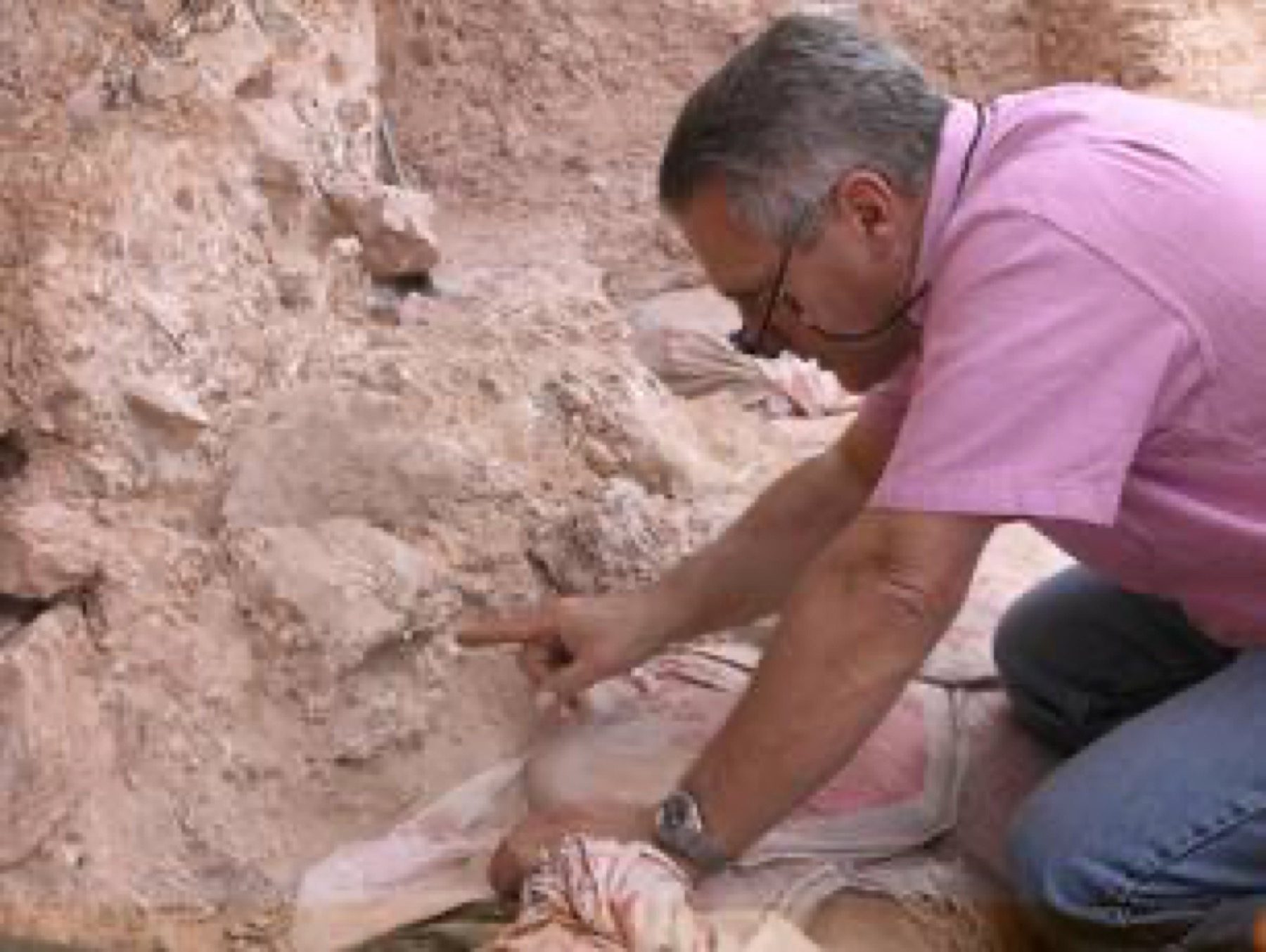
In Morocco, faces recognisably ours stare out of rock three hundred thousand years old. In a South African cave, someone ground ochre and strung shell beads ninety thousand years ago. People crossed open ocean to Australia when Europe was still ice. The capacity for art, navigation, astronomy and planning is not a late gift of farming — it is old, deep, and pan-human.
If modern minds existed for ten times longer than recorded history, then the question is not "how did they suddenly become clever?" It is: "where did ninety thousand years of cleverness go?"
■ Grounded (A): Jebel Irhoud ~300 ka · Blombos ~73–100 ka · crossing to Sahul ~50–65 ka. Every major date has moved one way — back.
Through the Ice Age the oceans stood 120 metres lower. The coasts were not today's cliffs but vast warm plains, river deltas, sheltered bays — the richest land on Earth, and exactly where people gather. That is where the deepening of human complexity would have happened first.
Then it vanished. Beneath the North Sea lies Doggerland, a drowned country whose rivers and hills are mapped from the seabed, whose tools come up in fishing nets. Off the coast of Israel, divers swim through Atlit-Yam — a Neolithic village with its wells and its stone circle, sunk and preserved.
Absence of evidence is exactly what a drowned homeland looks like.
■ Grounded (A): post-glacial sea-rise ~120 m · Doggerland · Atlit-Yam. □ Proposed: that the heartland of early complexity sat on this now-drowned shelf.
At the close of the Ice Age came the Younger Dryas: an abrupt, savage return to cold, pulses of meltwater, continental megafloods, and — over the millennia that followed — the final drowning of the coasts. Whatever stood on the low ground was erased.
On every inhabited continent, the same memory survives: a great flood that ended a former age, and a remnant who carried knowledge through. Mainstream reads these as local floods retold; our theory reads them as the scar of a real, shared catastrophe — the moment the long dawn was cut off.
■ Grounded (A/C): Younger Dryas climate reversal · +120 m drowning. □ Proposed / contested: flood & "lost age" myths as cultural memory of it (mainstream: independent local floods — graded D in our map).
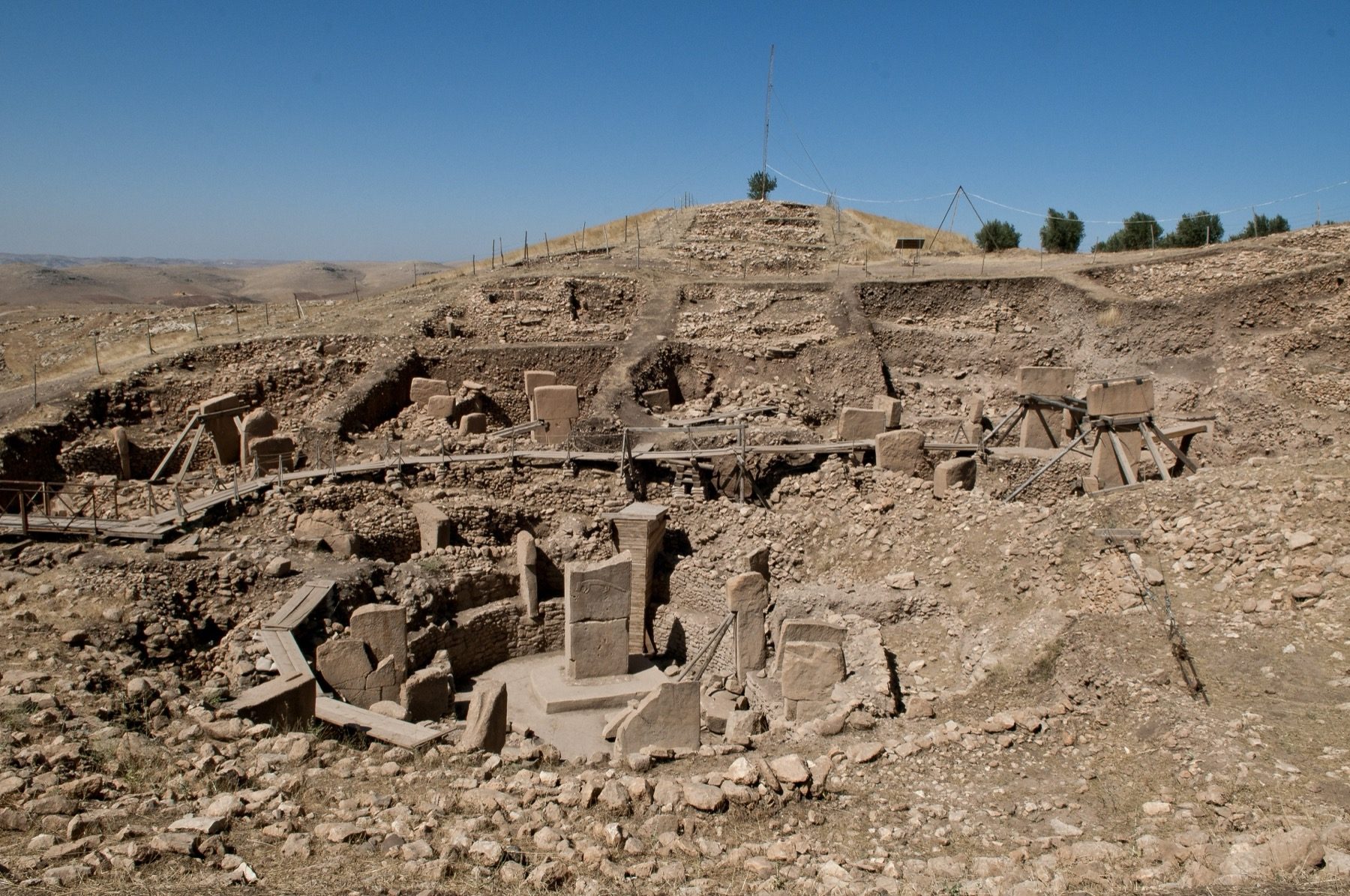
On a hilltop in Anatolia — high above the ice, high above the flood — hunter-gatherers raised rings of carved stone pillars before pottery, before metal, before farming was complete. Göbekli Tepe should not exist by the textbook's order of things. It arrives already mature.
Our theory reads it not as an inexplicable first, but as an outflow — survivors gathering on safe high ground, fixing inherited knowledge into the most permanent medium they had: stone. What they encode is, above all, the sky. The portable, weightless knowledge — the calendar, the stars — is exactly what survives a collapse and is carried first.
Civilization did not begin here. It began again.
■ Grounded (A): Göbekli ~9600 BCE, pre-pottery, hunter-gatherer builders; a whole culture (Karahan, Taş Tepeler). □ Proposed: as re-foundation, not invention from zero.
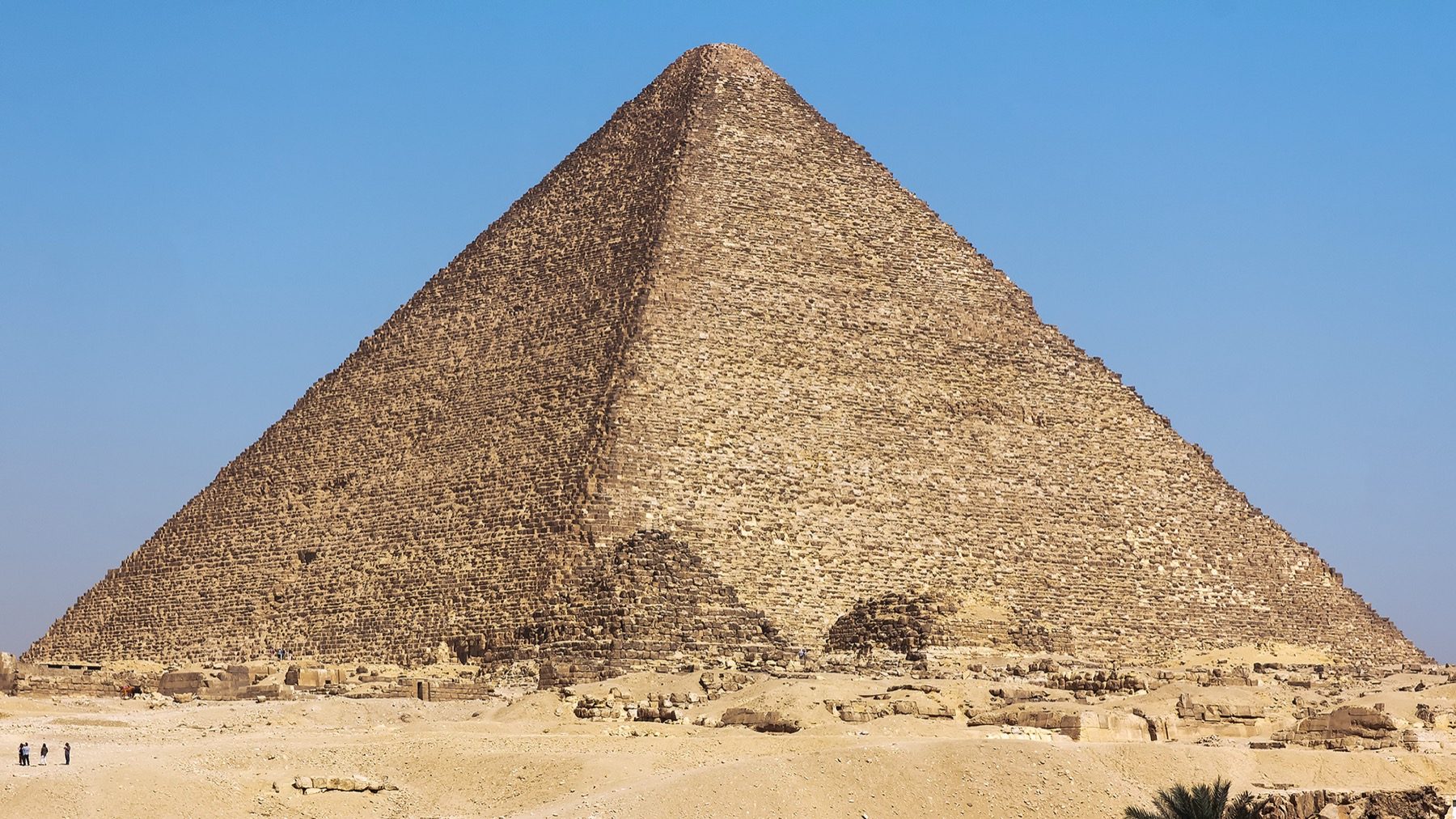
Across the world, unconnected peoples reach for the same forms: vast oriented stone, the pyramid, the alignment to solstice and star. The Great Pyramid finds true north to within a few arc-minutes. The Maya track Venus to the day. Nabta Playa watches the sky before Stonehenge is dreamed.
Mainstream explains the worldwide pyramid as convergence — many peoples independently finding that a pile of stone is stable and a tomb is worth marking. Our theory adds a second possibility worth weighing: a shared inheritance — a common template of sky-knowledge and monumental memory, carried out of the lost age by the survivors and their teachers.
Why build them? In this reading, the monuments are durable memory: when writing is lost, you write in mountains — orientation, proportion and the heavens encoded so they cannot rot or drown.
□ Proposed (the theory's reading): shared inheritance + astronomy-as-memory. Mainstream counter: independent convergence (the "pyramids everywhere" claim is graded D in our map — we mark, we don't hide).
◇ HYPOTHESES · NOT CLAIMED AS FACT
The grounded story above says the past was older and more capable than the textbook admits. The frontier asks the bolder question: how far did the lost world rise — skilled but pre-industrial, genuinely high-technology, or touched by a contact, with an earlier civilization or from elsewhere? These are not proven. We keep them because, if any held, it would fit the same logic — and because the best theories name their own open edges.
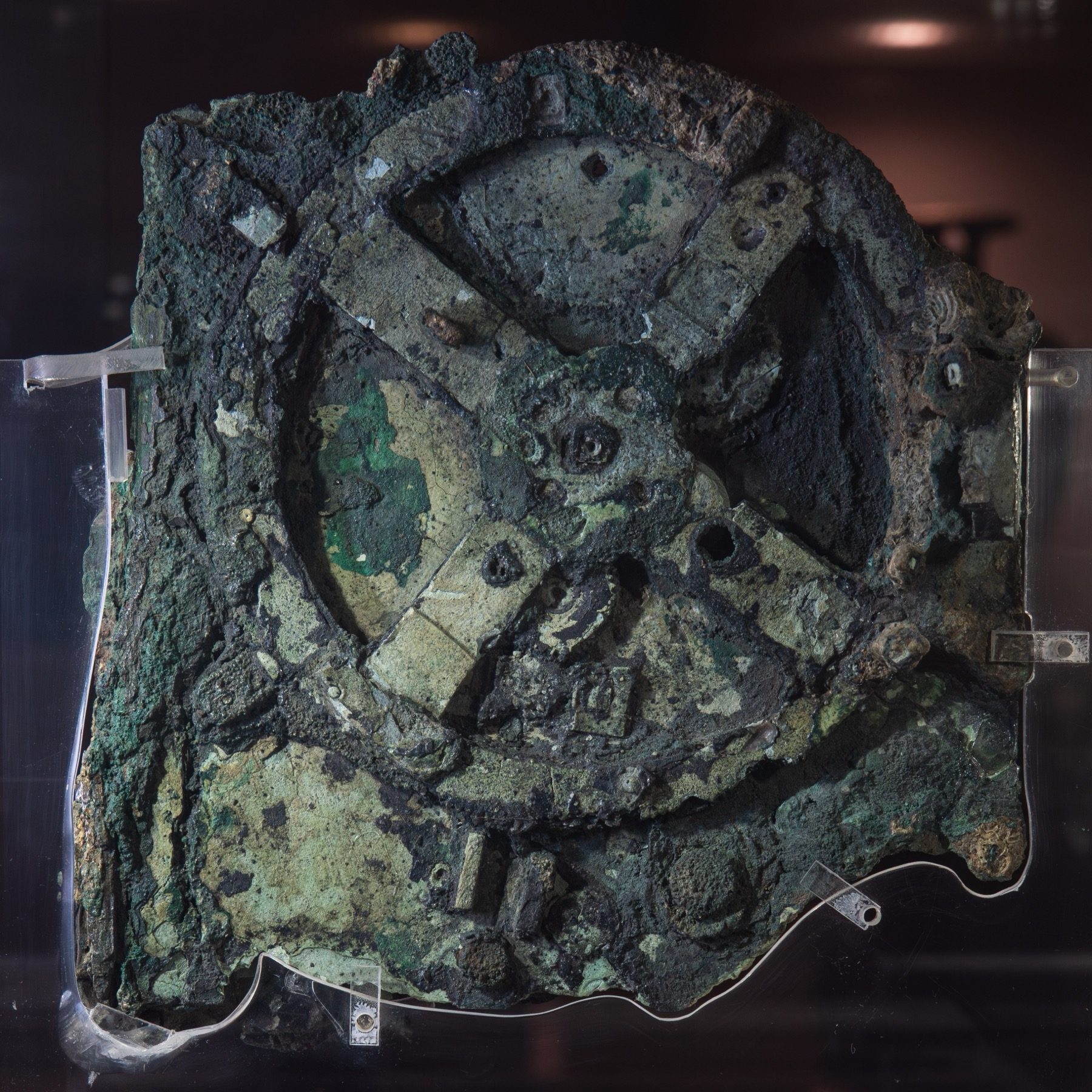
The Antikythera proof-of-principle
A geared bronze computer from ~150 BCE — then nothing like it for 1,400 years. It proves that high sophistication can be real, and can vanish almost without trace. It is our calibration: this is what a genuine "out-of-era" artifact looks like.
Status: ■ grounded (A). The one anchor that makes the rest worth asking.
Lost machining?
The precision of Egyptian and Andean hard-stone work — tube-drilled granite, micro-fitted polygonal walls — invites the idea of lost tools. Honestly: small-scale work has been reproduced by hand with copper and sand; an independent AI cross-check rated 0 of 5 such cases as breaking "the Wall." It stays a frontier question, not a proof.
Status: ◇ speculation (graded D). Frontier, not foundation.
The structures under Giza?
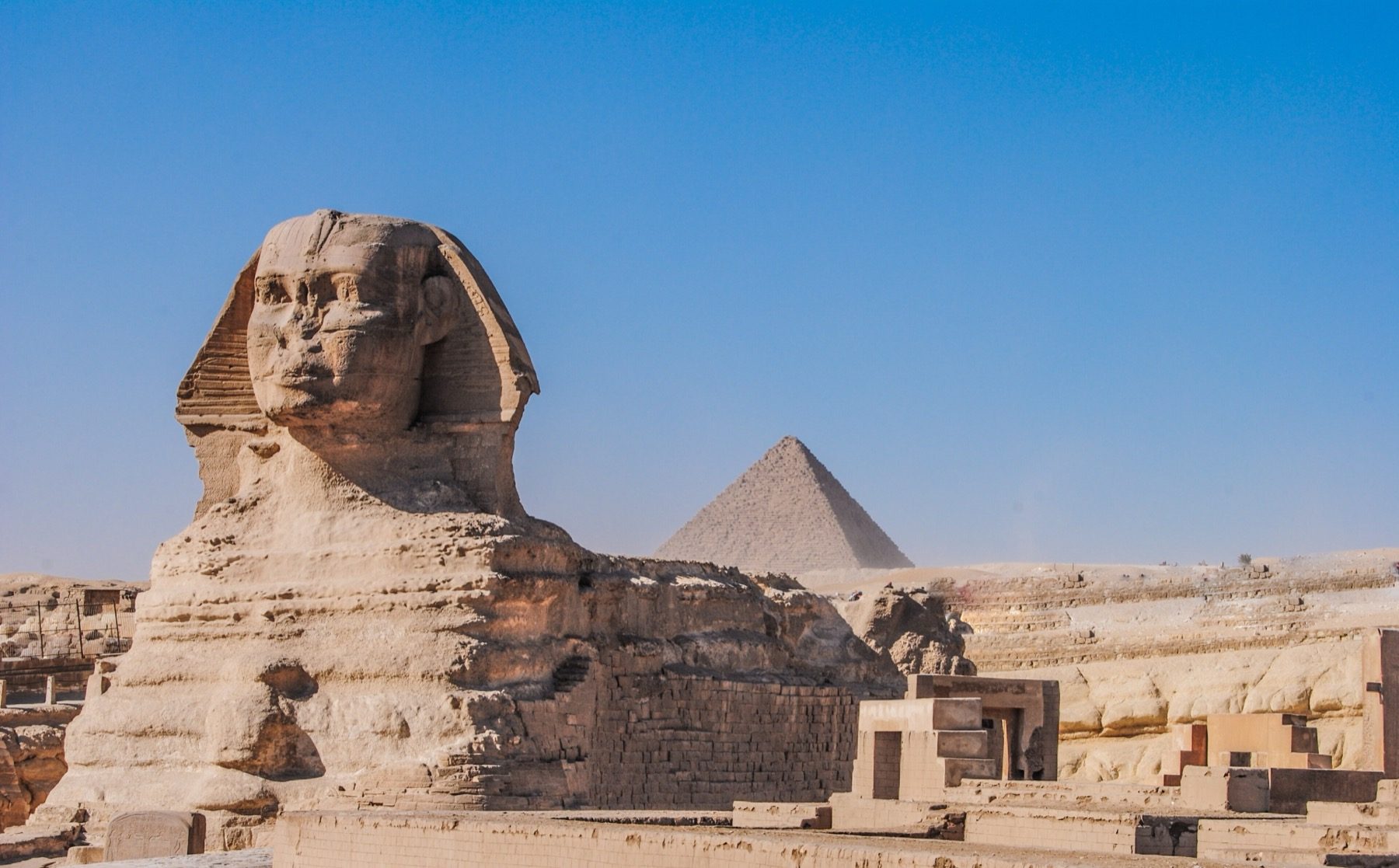
In 2025 an Italian team claimed radar (SAR) revealed shafts and great cubes hundreds of metres beneath the plateau. Mainstream geophysics says SAR cannot see that deep, and the work is unreviewed — so we file it as a vivid, unconfirmed claim, awaiting drilling or independent survey.
Status: ◇ speculation (graded D). Test: peer-reviewed data + independent geophysics.
The "blood of the gods"?
Old languages call royalty "blue-blooded." What if the phrase remembers something literal — beings whose blood ran on copper, not iron, under a different ancient sky with less oxygen? It is a haunting idea. Honestly, the chemistry as usually told runs backwards (copper-blood is blue with oxygen, not without) — yet the deeper question it gestures at, whether the ancestral world and its "gods" were truly other, is the frontier's open horizon.
Status: ◇ speculation (graded D, sub-claim E). Held as a question, not an answer.
The honest pact: everything in this act would have to earn its way down to grade A — and the test is always the same. One period-anomalous artifact, from a securely dated, undisturbed layer, that the era could not have made. Bring that, and the frontier becomes the foundation. Until then, we dream here openly, and build on the grounded acts below.